Crown of Salt - A mini - campaign postmortem
Here are some of my fresh thoughts after wrapping up a mini-campaign running Crown of Salt in Mörk Borg. This took a total of 5 2hr-ish sessions with a group consisting of 3-6 players each week.
There are spoilers discussed, so anyone looking to play this adventure in this review should read no further.
Crown of Salt is an ambitious adventure that, when it all works, goes incredibly hard. When it doesn’t it feels like it hates you.
Tonally, it all works. This adventure is intoxicatingly bleak. The world Tania Herrero has created will fill you with awe and dread. It sucks you in and drowns you in caustic brine. Every aspect of the module, from the room keys to the pre-gens is working to evoke this feeling. It is one of a kind in this aspect and should be applauded for it.
Even the GM, reading the module as it goes along, is piecing together this story, through striking artwork paired with effective and punchy text. Reading the module is a treat in its own right.
This is a double edged sword, unfortunately.
While running the adventure out of the book is easy enough, the information design enforces a linear structure during play. It was a shock for me to realize how much player agency is sacrificed to adhere to this act structure and the narrative progression.
It’s weird because while this is not a railroad in any traditional sense of that word, it still is a railroad. The tracks are just quantum. More on that later…
First off I think the town of Saltburg is a fantastic riff on the starting tavern so common to fantasy adventure games. In short, its a trap you won't be aware of until long after you've left town. You could start the adventure already on the way to the Rifts if you wanted to squeeze the whole thing into a single session, but you'd be missing out on Saltburg's qualities. Namely, the potential hirelings who are all vividly memorable and have their own agendas. The adventure implies that they are all eldritch imposters called Latrofax, though their unique goals allow the GM to determine for themselves if they want to run them as such. In my case, I went with them all being imposters who pursue their goals only as a ruse.
A quick note here on NPC betrayal: I like to avoid them as much as possible in my games, as it can create a toxic table culture and errs on being adversarial. Here I think the betrayals fit the tone. Psychological horror is prevalent throughout the whole affair and you'll want to lean into that when running it, so long as the table is willing to engage with that.
Following the section of the book detailing Saltburg, I noticed a very curious lack of information regarding distances from the town to the Rifts and this is where the book's major problem rears its head. Some text is given describing what the path looks like, strongly conveying a sense of unease. But instead of telling the reader how long it would take to get to the Rifts the next piece of information is a list of random encounters that happen in the woods at night.
So, am I to assume that this journey may take more than a day? I am left with nothing to make that judgment, not even a rough map. I ended up ruling that it could necessitate an overnight outing should the players dally in any way (spending time shopping in town, hunting, etc.)
This problem extends to The Rifts, where it really becomes glaring. The Rifts are an underground tunnel network that have their own exploration procedure. This felt like an attempt at Flux space but with some steps missing. Rift exploration happens in travel phases whose default duration is unspecified. Instead, a player is selected as the leader, and has to succeed on 4 DR12 attribute checks. Every failure adds an hour to the journey (we know torches burn for 1 hour, and lanterns for Presence+6 hrs) and comes with a consequence based on the attribute tested. After these rolls are made, the GM randomly rolls for an exploration event. After 4 exploration events, the party finds the Forgotten Temple. Repeat results lead players to the Tomb of the Promised Princess. Hirelings (Latrofax) will get you there on a 1 in 6 chance after every exploration phase. The odds increase every subsequent phase.
These events are all fantastic. There is so much variety that it is likely impossible to see even half of them before the campaign ends and there is no telling what order they will show up in. Every table’s experience of exploring The Rifts will be different because of this system. Each event is weird, unsettling and brimming with tension and dread. They are a big highlight of this module and reason enough to want to run it. Hell, steal them for any cave crawl you have planned next. Trust me, it'll be worth it.
But while these events are randomly determined, they are effectively dots on a straight line. According to the text, players cannot map The Rifts. They are too big and sprawling. This procedure abstracts that forward push into the underworld, sewing in randomly determined beats before it crescendoes at the Forgotten Temple. The problem is this procedure only goes one way. There is no guidance in the book on how the players are supposed to backtrack or find their way out.
This is why Crown of Salt, as written, is a railroad. The players are being pushed off an inevitable cliff and they don’t really have a way to opt out.
I really struggled with this aspect of the adventure when it came to prep. In play it mostly was fine, but when the topic of backtracking inevitably came up, I had to improvise a way to use the exploration procedure, which was only designed to go in one direction, to try and abstract a way it could go in the direction the players wanted to explore.
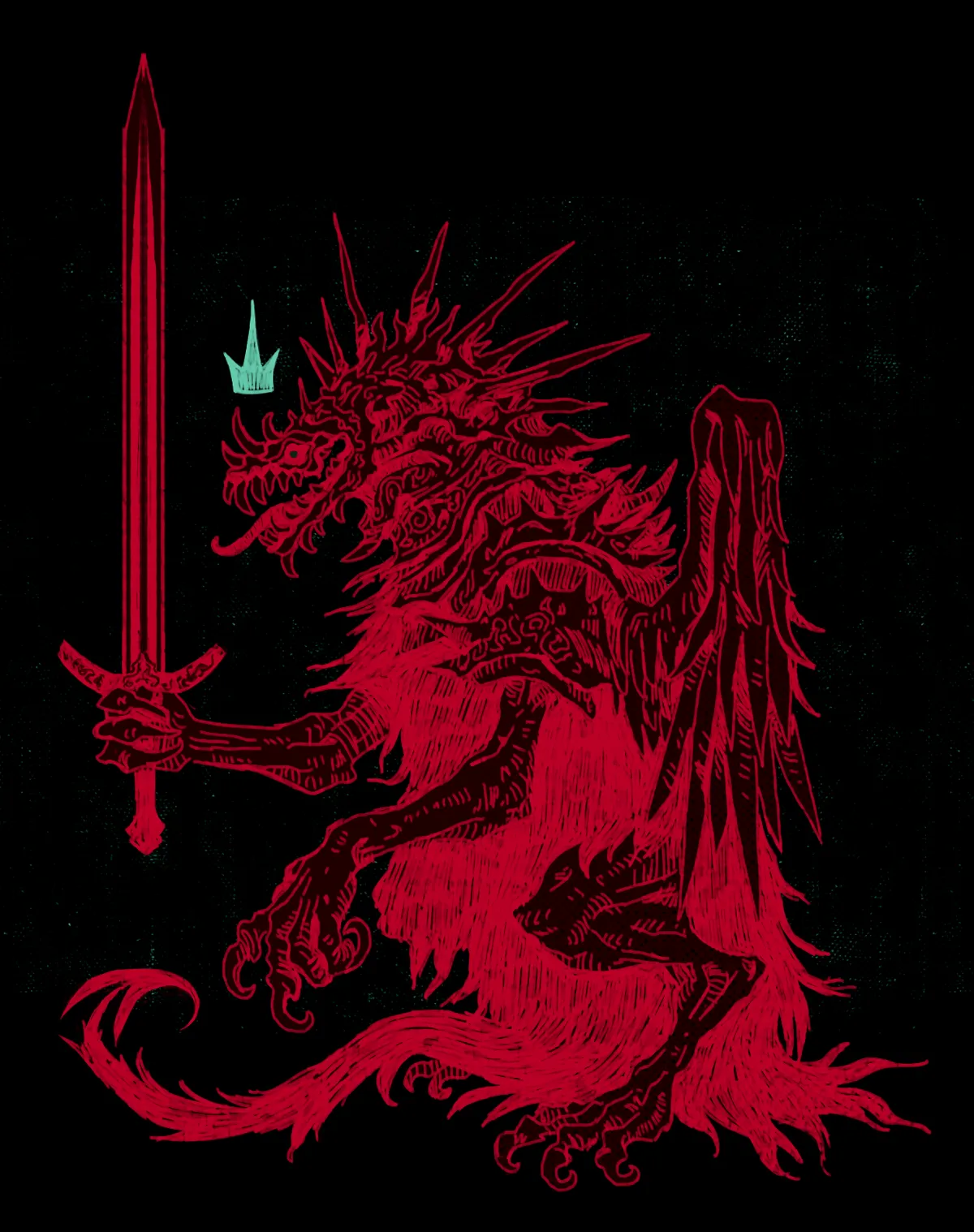
What complicates this issue further is how the Tomb of the Promised Princess is handled. On its own, it is a really cool adventure site that feels like one of those huge hidden areas in a Dark Souls dungeon. Easy to miss, but full of amazing content for those who find it. This is where players get to learn some cool lore (recontextualizes everything) fight an ancient dragon and loot a powerful silver sword. It’s fucking awesome.
Except that sword is a very specific key to an insanely hard lock to the Forgotten Temple’s only entrance, and as written it is very possible for the players to not encounter it at all, not because they chose not to, but because the dice decided they wouldn’t see it on the way. The book’s instruction to the GM: the hirelings try to kill the party at the Temple’s entrance and try to recruit new adventurers to do the job.
My players made it to the Tomb before reaching the Temple, as determined by fate, but they could not retrieve the sword from the dragon’s den, not for lack of trying. That dragon fight is an easy TPK and there were quite a few player deaths in my run. Instead of tempting fate, the players made the rational decision to abandon the fancy weapon and live to fight another day. They did not know that this sword was crucial to surviving the Forgotten Temple’s entrance.
When they got there, I brought in an NPC to present them with the option to go back for the sword (I had a quick procedure in mind for how they would get there) but they opted to try their luck crossing the bridge passing the flame barrier at the Temple entrance. I telegraphed as much as possible the danger they would face doing this. They came up with some great solutions for crossing the bridge, avoiding the rays of fire from the barrier. Then when they got to the barrier I caved in. I felt like forcing them to take huge amounts of damage from the fire was a huge "fuck you" to the players, especially because they did not have any other option for how to get into the dungeon that caps the adventure, and forcing them to go back for the sword after their creative problem solving goes against my values as a GM. Sorry, not sorry. I nerfed the barrier.
Thankfully, the dungeon itself does not suffer from the same linearity as the rest of the module. Players are given plenty of options to move through it, making informed decisions and building their knowledge of the space. As far as dungeons go, it’s excellent. The pelagic theme literally oozes from every nook and crevice. There aren’t much in the way of enemies to fight, but there are plenty of hazards and fun things to interact with. Every magic item acts like a monkey’s paw and leads to some interesting outcomes. There is one wandering monster, The Cantigaster, and he is appropriately scary. The advice on how to run him is excellent and crystal clear. Once he finds you, he isn't wandering anymore, he is hunting. Run.
It feels like a great example of a negadungeon, because ultimately being here is extremely BAD and the risks FAR oughtweigh the benefits. Basically, you are here because you are a desperate idiot (welcome to Mörk Borg). Making it out alive could make you rich. But it’s more likely you end up dead, deformed or causing an apocalypse. I love this.
There is a way to succeed, and I use that word very loosely, which requires the ultimate sacrifice. Players can find a grimoire in the dungeon with the help of The Crow (should they pick him up in town) which contains a ritual for stopping an apocalyptic flood that gets triggered upon opening the Abyssal Gate or killing The Cantigaster. Invoking the ritual requires two willing souls to be sacrificed. It's quite likely to end up being the players. Really, the good ending is never having come here in the first place. Since the adventure doesn’t leave room for players to make that choice once they enter the Rifts, it is probably the option that is the least devastating, all things considered. For our mini-campaign, my players jumped on the opportunity.
So overall I think this adventure challenges a lot of OSR assumptions in ways that are both good and bad. I am definitely interested in checking out more of Tania Herrero’s work, because there is a vision on display here that feels bold and confident. It just maybe isn’t the most clear eyed when it comes to giving players agency throughout the whole adventure. Thankfully, none of these problems hurt enough to sour my overall experience. I truly think this is an awesome adventure with some fantastic ideas that sometimes chafe with the expected play culture. A flawed masterpiece worth checking out for anyone looking for something fresh.
It’s quite telling that when the adventure was over, a few of my players expressed that they were very keen to run it. To me, that’s the biggest compliment for how the game went.