The Dark Souls of TTRPGs
Minigame: Take a shot every time I say Dark Souls.
I’m a FromSoft fan. I like my souls dark. My blood borned. My rings elden.
I definitely see the appeal of trying to capture the gameplay, tone and catharsis of those games in a TTRPG.
Dark Souls is not a mechanically complex game. Controls are straightforward and your means of interaction with the world often amounts to an attack, an item use or an evasion/parry/block. For the most part, your character is defined by a handful of stats which influence things like their damage modifiers, health and resistances along with what items they are allowed to carry.
Levelling up requires an accumulation of souls, which is the main currency of the game, used also by merchants selling equipment. You accumulate souls primarily through killing enemies, but can also find clusters of them on the bodies of long-fallen heroes. When you die, you lose all the souls you have accumulated, though you have one chance to go back to collect them. The caveat, is that all enemies and traps reset when you respawn.
It's' style of game that lets the player push their luck. This can be in moment to moment fights where the player must exercise some restraint in order to survive. Button mashing will likely get you killed. It is more keenly felt in exploration. You can try running past that mini-boss to get the shiny item across the hallway, but risk loosing all your accumulated souls. You can also go back to the last bonfire to heal, but with the knowledge that all enemies will respawn after doing so.
What is most remembered in Dark Souls is THAT feeling. You know the one if you’ve played any of those games. It’s the moment where you have enough souls to level up, but you are nowhere close to a bonfire. You pray that the next room will be the one where you get to rest, or that you at least discover a shortcut to the last bonfire.
To me, that’s the sauce of a Souls game.
So far I’ve played two TTRPGs that I think come closest to emulating the Soulslike experience.
First, let me get this out of the way: Dark Souls, in many ways, feels like old school D&D. The DNA of the world’s first roleplaying game runs strong in this series. Dark Souls, at least the first entry, is a dungeon focused game after all. Gameplay does feel like a crawl and it is unforgiving. In many ways, the modern OSR has taken inspiration from Dark Souls and you can feel it in many of the new systems, settings and supplements that have been coming out.
The games I want to talk about belong to this lineage. I categorize both as modern OSR and they definitely share some common DNA. Runecairn is a Cairn hack and Grave is a Knave hack. Knave was built off of B/X and Into the Odd, Cairn was built off Into the Odd and Knave. It's all one big family.
I'm interested in seeing how these two games diverge and intersect in their attempts to emulate the Soulslike genre and whether or not they are successful (in my humble opinion).
Runecairn:
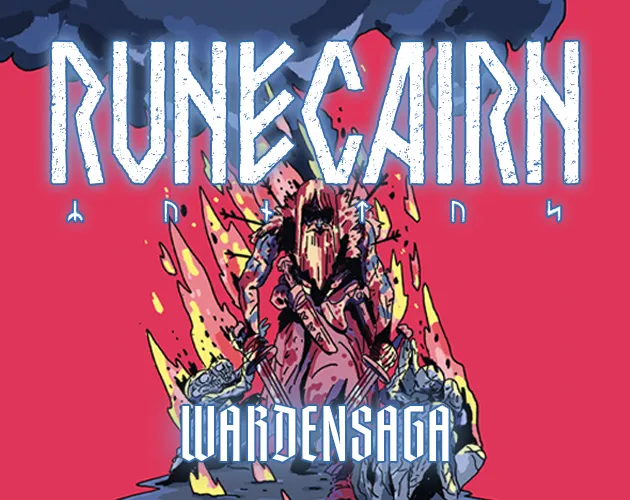
Runecairn perhaps tries hardest of the two to emulate the Soulslike gameplay formula. In my opinion it skews too faithfully in adapting the specific gameplay loop and suffers as a TTRPG. That said, it absolutely achieves its goal of genre emulation, but as a result raises the question of why we want the genre to cross over into TTRPGs in the first place.
Runecairn is unique from most TTRPGs in that it is a dungeon exploration game designed for duet play. You don’t play with a party of PCs, instead you play as a single PC and occasionally have the option to "summon" other players.
You start the game by picking one of a small handful of classes who come equipped with starting skills and equipment. From there you can customize them as you see fit similarly to how Dark Souls starting classes work. The system is effectively classless past level 1.
While built on the chassis of Cairn, Runecairn spices up its combat system with rolls, parries and blocks. By not having a to-hit roll, the combat feels fast and deadly. It matches the combat tempo of a Soulslike as best as a TTRPG could. You even have the equivalent of an estus flask, and when you die you come back without any of your accumulated souls. To level up you need to take your collected souls to a bonfire and distribute them across your selected stats.
This game has my favorite take on Odd-like combat, maybe tied with Mythic Bastionland. ByOdin’sBeard (the dev) has a knack for giving players options in a fight without making it cumbersome. We Deal in Lead is an excellent example of how this works for gunslinging - but I digress. So far, my favorite aspect of Runecairn is how combat matches the tempo and kineticism of a Souls game, while still playing like Into the Odd. Stamina is balanced by having maneuvers require a save, not to execute, but to conserve energy. So a failed block save may still stave off damage, but tire you out mid-fight, preventing further flourishes.
Runecairn’s other novel feature is how leveling works. Souls are the currency used to level up, but unlike Dark Souls, you aren’t grinding for hundreds of thousands. Instead, each soul here is a physical object in the world that can be found by defeating a powerful enemy or through exploration. It is up to the Warden (GM) to decide the placement and frequency, much like how you would place treasure in old school D&D. One soul is enough to increase a stat (of which there are 4) so you don’t need to track hundreds. Because this is a d20 roll-under system, stat increases can be incredibly beneficial.
When you die, you come back, but lose all your collected souls and a bit of your will to live. Lose enough of this metacurrency and you will go hollow (basically unplayable). The world resets to a default state after resting or dying. This is where I struggle with the game overall.
Runecairn does an awesome job of presenting its Norse Myth inspired setting. This is not your standard Dark Fantasy TM game. There is clearly a love for the old sagas here, and the designer is keen on players leaning into the Viking theme. Here be Ragnarok.
For what it's worth, the game comes with a robust toolkit for generating Soulslike levels and basically has all the information you need to run this setting. There is even a fantastic bestiary you can get as a separate 1st party product, which covers all kinds of monsters and encounters, which for the most part don't necessarily have to result in combat.
The problem is, when you reset the world after every bonfire rest, the world feels static. When I play TTRPGs, I want to feel like I am leaving my mark on a fictional world. I’d rather not have all my impact reset when I want to regain HP. Here, enemy placements, NPC attitudes, terrain manipulation, it all goes back to a default state declared by the Warden. Some powerful enemies, like Dark Souls bosses, don’t reset, but for the most part gameplay can feel quite repetitive. Furthermore, it would prevent me from creating more complex dungeons since faction relationships would be incredibly hard to track with bonfire resets. Shorter dungeons, like the intro one The Broken Sword, seem like the best approach.
Bonfire resets are aspect of the videogames that just doesn’t quite work when playing a TTRPG, at least for me. Even in the Souls games I end up getting fed up after too many resets and just rush to the boss arena to skip the grind to get there. I can persevere and git-gud in a videogame that seeks to teach me through repetition, but in a duet TTRPG it will just look like two friends getting increasingly tired and frustrated at each other. Miyazaki is really blessed that he's not standing directly in front of his players when they struggle against his design... Just saying.
Overall, Runecairn is a fascinating experiment in trying to faithfully adapt a beloved style of action RPG into an Odd-like. There is lots to love here and the game book itself feels like a complete package, especially the Wardensaga edition. It even comes with some robust solo-tools that give you everything you need to play alone. There's even an obtuse multiplayer component in summons and invasions, just like Dark Souls. One thing I can confidently say is that this game knows exactly what it wants to be and stays true to it. Definitely worth checking out if you and one other buddy really like both Vikings and Dark Souls (a crossover I’m sure is pretty popular).
Grave:
Before I get into my thoughts on Grave, and specifically how it approaches Souls-like TTRPG design, I want to preface a few things:
Firstly, I experienced this game as a player and not as a GM. I think that allows me to at least gauge if it plays like a Soulslike, rather than having the more birds' eye perspective of the GM.
Secondly, the module we are playing through is Leo Hunt’s The Shrike, which is heavily inspired by Dark Souls in its aesthetics, lore and tone. This certainly influenced how closely I think Grave emulates Dark Souls and works in the system's favor.
Finally, the module was initially statted for OSE, but our GM has converted it to Grave. The Shrike has its own system for awarding XP, but since we were playing an open-table adjustments had to be made. The Grave conversion still kept the gold-for-XP levelling system of classic D&D (and Knave, which Grave is based on), whereas RAW Grave normally awards souls for defeating enemies and bosses. For more details on how this has been working so far, check out our GM's campaign report.
With that out of the way, let's talk about how it's Dark Souls.
You gain soul shards through defeating enemies and in our case through acquiring loot as well. These soul shards disappear when you die. In The Shrike, players can resurrect 1 hour after death, since they are all already in hell (yaaay). Grave has a similar mechanic that got synthesized here, where you can resurrect as many times as your charisma modifier before going “hollow”. Going hollow is not a mechanic that is built into The Shrike, but it does fit well enough (Runecairn also has a similar system) and leads to an ultimate fail-state. Crucially, in Grave, and The Shrike, the world state does not reset on player death.
Levelling here most closely resembles Dark Souls. When you gain a level, you can decide to spread 3 points across your 6 stats, or increase your HP. Alternatively you could give up all that actually useful stuff to gain a memory of your backstory (laaaaaaame). Effectively, this means you can actually get really strong. It’s basically Knave’s levelling system, but uncapped, which is awesome. There are no bonfires, but you can only spend your hard earned soul-shards to level up when you are resting in a safe place (basically replace “bonfire” with a town). Since this is literal hell, there are very few of those :(
What it leads to is THAT feeling which I described at the top of this post. The fear of losing everything and not knowing when you'll make it back to safety. In my recent experiences with this campaign, my character ended up carrying the GDP of a small nation in treasure, which could level me up at least 3 times if I made it back alive. The only problem was our party was in a dungeon far, faaaaar away from the nearest safe haven. It would be a miracle if I survived…
I did!
It led to an incredibly satisfying level up, the kind I have only ever gotten from a Souls game. Its that feeling of having just defeated a boss after an hour of working your way through the dungeon, doing everything you can to not lose your souls, and finally making it to a bonfire, dumping all your points into VIG so you never get one-shotted again. Grave lets you do that.
The thing is, you can get this feeling with OD&D, B/X or any gold for xp system where you only get to bank it in town. However, with Grave, death is not the end of your character. You have to endure and push forward knowing you just lost your chance at getting stronger and have to start all over again. To me, that specifically evokes Dark Souls whereas if OD&D resembles any videogame (that isn’t a D&D derivative) it would be something like Arc Raiders or Tarkov.
Where it doesn’t quite try to emulate the videogames is in its combat system which is basically roll-over D20 combat. You have to meet or beat a DC and if you can’t then suck it, you wasted a turn. It's fine and familiar. It does play a bit slower than Runecairn, but for the most part it's still fast and deadly. The DC’s are generally quite high for most rolls which encourages speccing into specific stats and building around that.
I started off as a lowly dredge with shitty stats, but now I’m looking closer to a paladin in how I’ve decided to specialize. I’ve even picked up a bit of defensive magic through exploration. I really dig how progression gets informed mostly by your experience adventuring, which is very Souls. Finding items out in the world encourages you to build your stats around their use. You aren’t locked into any class, instead the openness allows for experimentation. It’s my favorite aspect of classless systems like Knave and reminds me how restrictive traditional class systems can be.
It is important to keep in mind though, that Grave, which currently sells for $2 on itch, is not what many would consider a complete game. Like it's progenitor, Knave 1E, it feels more like a toolkit to run existing OSR content in a more streamlined way. That streamlining takes effort when it comes to system conversion, which will likely need to be done since both Knave 1E and especially Grave don't have a whole lot of 3rd party modules.
Unlike Runecairn, Grave does not come equipped with the tools the GM needs to create a Soulslike adventure off the bat. Instead the expectation seems to be that you are already familiar with how to run an old-school game and are looking to spice up the gameplay to bring it closer to a Soulslike. This does mean that it will broadly work with most OSR material with some basic conversion work and that is exactly how it is being used in our ongoing campaign.
Conclusion:
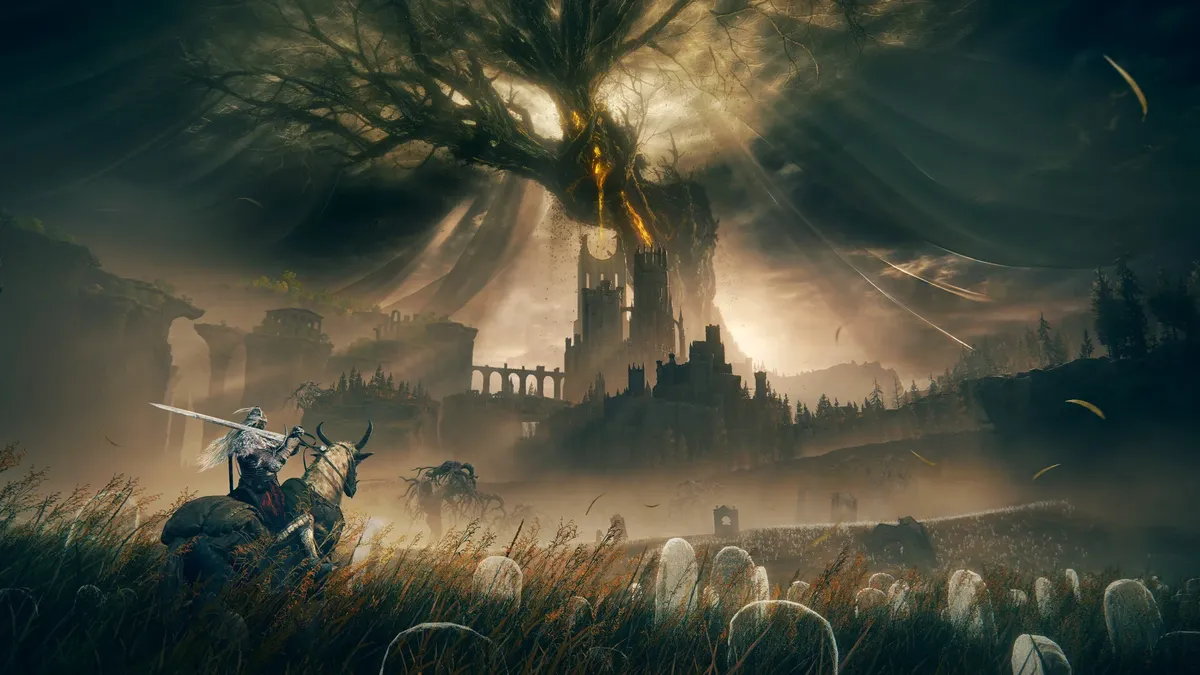
When it comes to Soulslike TTRPGs, you have two rock solid options that are both rules light but cater to different styles of play. If you are looking for something more focused on recreating the specific mechanics of Souls games faithfully, down to the single-player (with player summons) framework, then Runecairn is your homie. If you are looking for a more loose system to apply generally to more classic OSR play, then Grave is your guy. Both feel distinctly Soulslike.
Put it this way: I would struggle to run Keep on the Borderlands with Runecairn, and I would struggle to build a Soulslike dungeon with Grave on its own. Instead, go run B2 with Grave and see how it turns your game into a Soulslike, and run Runecairn to see how it is a Soulslike off the bat.
With my take out of the way I would like to open the discussion to you, the reader.
I would love to hear other people's takes on Soulslike TTRPGs. I think a lot of it boils down to the vision a GM has for their campaign and how they may bend or break a system to emulate the Soulslike genre.
For example, I'd be curious to hear from people who ran trad games in this style and what worked/what didn't. I know Daggerheart (sort of trad/sort of PbtA) has Age of Umbra, which includes mechanics inspired by Soulslikes and leans into that brand of Dark Fantasy.
Finally, would love to hear from people what constitutes as Soulslike design. Should we even try to emulate this genre in our TTRPGs or are we better off just stealing the vibes?